

Aging aircraft bring opportunity and responsibility in equal measure. For airlines, lessors, MROs, and international operators, the real challenge is not just how an aircraft looks on the ramp, it is whether the structure, systems, and records all tell the same story.
That is where aging aircraft inspection and records review becomes essential. A careful program helps you identify hidden maintenance risk, confirm compliance, and make better decisions about continued operation, lease return, sale, or import and export certification.
Why Aging Aircraft Inspection Matters
Older aircraft can remain safe and valuable assets, but time changes everything. Fatigue, corrosion, prior repairs, deferred findings, and incomplete documentation can all create operational and financial exposure if they are not identified early.
For B2B aviation teams, the inspection is only half the job. The other half is proving that the aircraft’s history supports its current condition. That means reviewing maintenance logs, structural repair records, AD compliance, service bulletins, and major component traceability.
What Operators Are Trying To Avoid
- Surprise findings during lease return or pre-purchase
- Gaps in compliance documentation
- Expensive teardown-level repairs discovered too late
- Delays in FAA import or export certification
- Disputes over aircraft value and maintenance responsibility
What A Records Review Should Cover
A strong records review is not a quick scan of binders. It is a technical audit of the aircraft’s life story.
You want to verify that the paperwork supports the configuration, maintenance status, and airworthiness claims. If the records are thin, inconsistent, or missing critical endorsements, the aircraft may require additional inspection, correction, or recertification work.
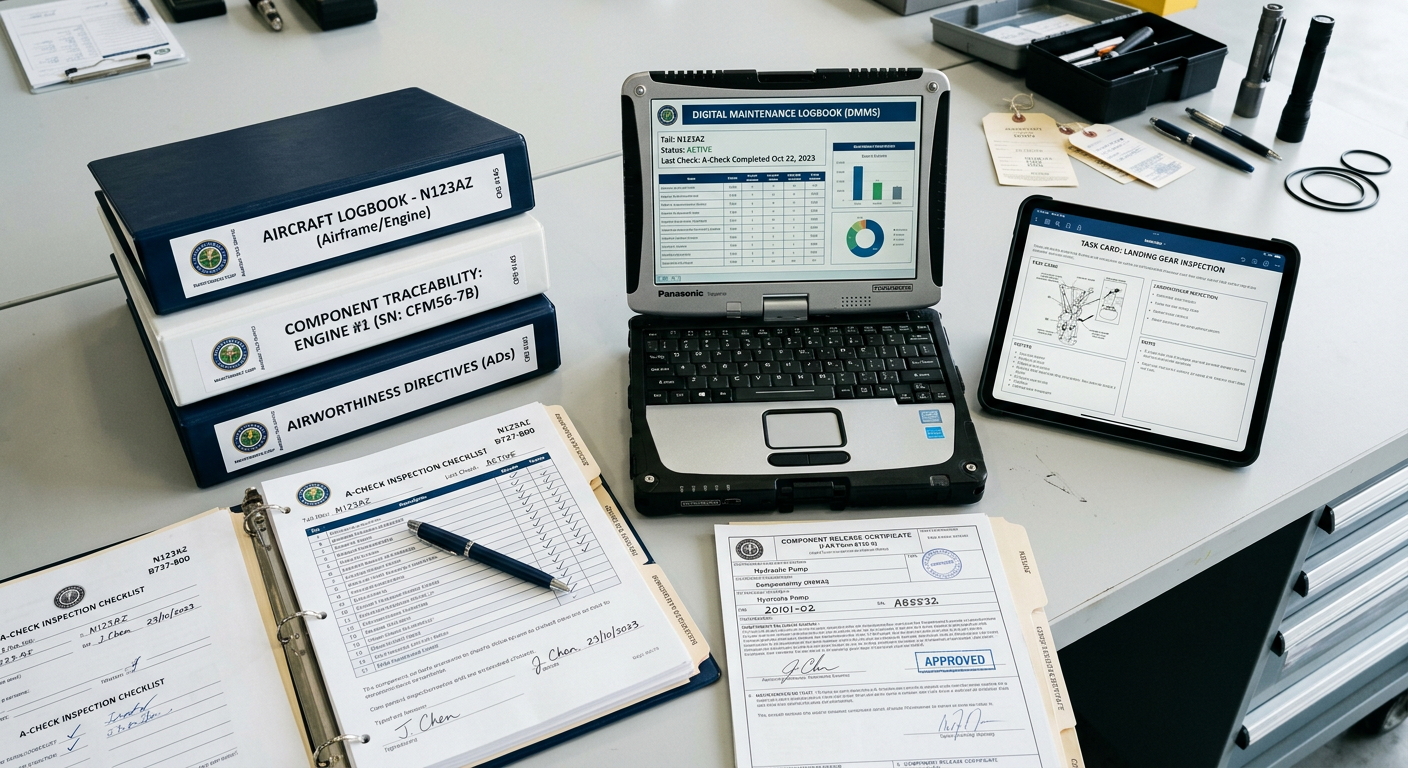
Core Record Areas To Verify
- Airframe, engine, and APU logbooks
- Structural repair and alteration records
- Airworthiness Directive compliance
- Service bulletin and manufacturer recommendation tracking
- Life-limited part status and traceability
- Corrosion prevention and previous damage history
- Weight and balance data, STCs, and configuration control
- Imported or exported aircraft certification documents
Red Flags In Older Records
- Missing logbook pages or unexplained time gaps
- Inconsistent hours, cycles, or dates across records
- Repairs with no supporting engineering data
- Unclear part history or incomplete release paperwork
- Evidence of repeated discrepancies without permanent corrective action
The Inspection Side Of The Equation
Even the best records cannot replace a physical inspection. An aging aircraft inspection should focus on areas where wear, fatigue, and corrosion are most likely to develop.
That often includes the fuselage, wing structure, landing gear, flight control surfaces, cargo and cabin areas, electrical wiring, and zones with a history of moisture intrusion or heavy usage.
Common Inspection Focus Areas
- Corrosion-prone structures and hidden cavities
- Fatigue-sensitive structural zones
- Previous repair locations and doublers
- Pressurization-related areas around doors and windows
- Landing gear condition and wear trends
- Avionics and wiring condition
- Cabin interior, floor structure, and emergency equipment status
A smart inspection program compares what is visible on the aircraft with what is written in the records. When those two sources disagree, you have a problem worth investigating immediately.
Why This Matters For Lessors And Buyers
For lessors, aging aircraft inspection and records review helps protect residual value and reduce lease return surprises. For buyers, it supports better pre-purchase decision-making and more accurate maintenance cost forecasting.
Aging aircraft can still be excellent assets, but only if you understand the true maintenance burden. A clean appearance does not guarantee clean records, and clean records do not guarantee hidden structure is sound. You need both.
Practical Business Benefits
- Better pricing and negotiation leverage
- Lower risk of post-close disputes
- More predictable maintenance planning
- Faster transaction timelines
- Stronger compliance confidence for international operations
FAA Requirements And International Operations
For foreign operators, especially FAA Part 129 operators in the Middle East, aging aircraft inspection and records review can be especially important when U.S. regulatory requirements apply. FAA Part 129 operators must pay close attention to § 129.105, because continued compliance depends on having the right inspection and maintenance controls in place.
For import and export transactions, the stakes get even higher. The aircraft must not only be airworthy, it must be documented correctly for the jurisdiction and operation involved. That is why many teams bring in specialized technical support when an aircraft crosses borders or changes ownership.
How To Build A Better Review Process
The best results come from a structured process, not a rushed last-minute check.
Start with the records, then move to the aircraft, then reconcile the differences. If the aircraft is being sold, leased, returned, or imported, define the objective early so the inspection scope matches the business goal.
A Practical Workflow
- Collect complete logbooks and supporting documents.
- Review compliance status and missing history.
- Compare records to the aircraft configuration.
- Inspect high-risk structural and system areas.
- Document findings clearly for stakeholders.
- Resolve discrepancies before closing or release.
This approach saves time, reduces surprises, and gives decision-makers a clearer picture of risk.
Working With The Right Technical Support
Not every organization has the internal bandwidth to manage a deep aging aircraft review, especially when the project also involves FAA certification, lease-return verification, or international export requirements.
That is where specialized support can make a difference. Air Tech Consulting provides FAA DAR services and technical support for airworthiness certification, Special Flight Permits, aging aircraft inspections and records review, lease-return and annual inspections, pre-purchase evaluations, and maintenance cost forecasting. For operators and lessors, that kind of support helps align technical findings with commercial deadlines.
FAQ
How often should aging aircraft records be reviewed?
The right frequency depends on the aircraft, operation, and transaction risk. Many teams review records before major events like sale, lease return, import, export, or heavy maintenance checks.
What is the difference between an inspection and a records review?
An inspection evaluates the physical aircraft. A records review evaluates the documentary history. You need both to understand actual airworthiness and compliance status.
Why do older aircraft need more careful documentation control?
Older aircraft have more accumulated maintenance history, more chances for repairs and modifications, and a higher risk of missing or inconsistent records if data was not managed carefully over time.
Can a clean inspection result still be a problem if records are incomplete?
Yes. Missing or unclear records can affect airworthiness, value, traceability, and regulatory acceptance even when the aircraft appears to be in good condition.
What should lessors look for before lease return?
Lessors should verify configuration, maintenance status, damage history, component traceability, and logbook completeness so they can avoid surprise findings and protect asset value.
Why is this especially important for international operators?
Cross-border operations often involve different documentation expectations, regulatory scrutiny, and certification needs. A complete review helps reduce delays and compliance risk.
Moving Forward With Confidence
Aging aircraft inspection and records review is not just a maintenance task. It is a business protection tool. When you combine disciplined documentation review with a thorough physical inspection, you get a much clearer view of airworthiness, value, and future cost exposure.
If your team is managing an aircraft sale, lease return, import, export, or compliance-sensitive operation, the safest move is to get expert support early rather than late.
Need Support With Your Next Aircraft Review?
If you want a practical, compliance-focused assessment, Air Tech Consulting can help with inspections, records review, and FAA technical support. Visit https://airtechconsulting.com to discuss your project and get the guidance you need before the next deadline hits.
In aviation, the hidden risk is rarely in what you can see first. It is usually in the gap between the aircraft and its records, and that is exactly where a disciplined review adds the most value.


