

Buying an aircraft is not just a transaction, it is a technical and financial commitment that can affect safety, dispatch reliability, and long-term operating cost for years. A pre-purchase aviation technical evaluation helps you see what is really behind the paint, the paperwork, and the seller’s presentation before you sign.
For commercial operators, lessors, MROs, and business aviation buyers, the smartest deals are rarely the fastest ones. A disciplined evaluation can uncover maintenance exposure, compliance gaps, aging-aircraft concerns, lease-return issues, and hidden cost drivers that would otherwise show up after closing.
Why a Technical Evaluation Matters
A pre-purchase review gives you a clear, independent view of the aircraft’s actual condition. It is not just about finding defects, it is about understanding whether the airplane matches your mission, your regulatory obligations, and your financial model.
This matters even more when you are dealing with imported aircraft, international records, or a fleet asset that must enter service quickly. A missed logbook gap or incomplete airworthiness record can delay delivery, trigger expensive corrective work, or reduce asset value.
What a Strong Evaluation Should Cover
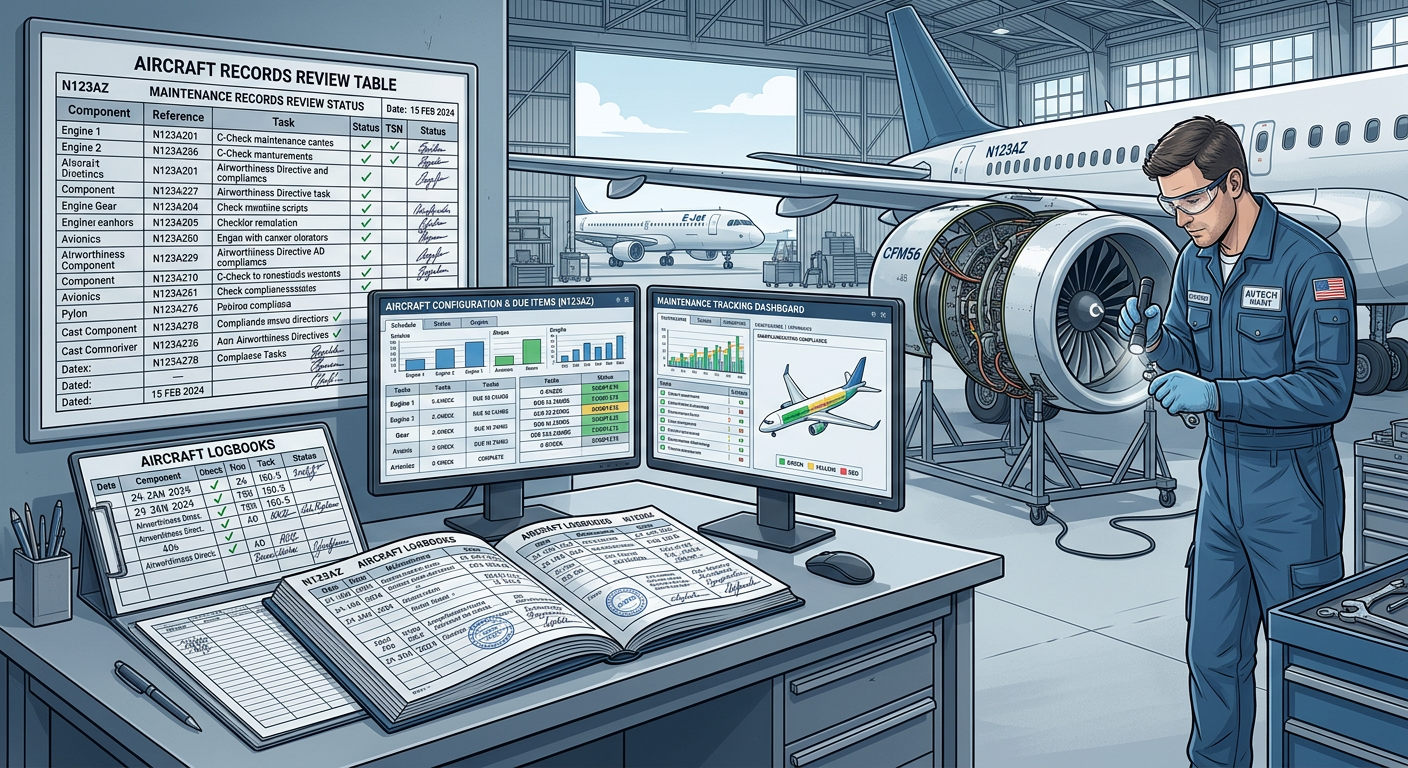
A credible review should go well beyond a basic walkaround. It should include:
- Maintenance logbook and records review
- Airworthiness directive compliance verification
- Damage history and repair documentation
- Airframe, engine, and APU status
- Landing gear and major component traceability
- Cabin, avionics, and system condition
- Corrosion, fatigue, and aging-aircraft indicators
- Inspection status against upcoming due items
- Regulatory fit for import, export, or operational transfer
Where Buyers Often Get Surprised
The biggest risks are often not dramatic mechanical failures. They are the smaller issues that add up quickly after closing.
Records that do not tell the full story
A logbook may look complete at first glance, but missing supporting documents, unsigned entries, or unclear repair references can create uncertainty. In aviation, uncertainty has a cost.
Deferred maintenance that becomes your problem
Some aircraft are presented as “well maintained” even though several items are nearing due status. That can shift a buyer’s cash flow assumptions almost immediately after delivery.
Age-related exposure
Older aircraft may need deeper scrutiny under aging-aircraft programs, especially when they are moving between operators or coming out of lease. For operators working under aging-aircraft requirements such as 14 CFR §121.1105, §135.422, and §129.105, documentation quality and inspection history matter a great deal.
The Business Case for Independent Support
When a buyer relies only on seller-provided information, the risk profile is harder to see. Independent technical support creates a more objective picture of airworthiness status, expected remediation, and post-closing maintenance costs.
That is especially valuable for:
- Aircraft leasing companies managing lease-return exposure
- Commercial operators protecting dispatch reliability
- VIP and owner-operated jets where downtime is costly
- International operators needing U.S. import or export certification
- Buyers comparing multiple aircraft on a true total-cost basis
In other words, the evaluation is not just a technical step. It is a negotiation tool.
Practical Steps Before You Close
Here is the thing, the best outcomes usually come from structure. A good process looks like this:
1. Define the mission first
Start with how the aircraft will be used. Corporate shuttle, charter, owner-flown, long-range international, or fleet backup all create different technical priorities.
2. Review records early
Do not wait until the final inspection to look at logs. Early records review can identify major blockers before you invest time and travel.
3. Match findings to financial impact
Every discrepancy should be translated into cost, downtime, or compliance risk. That is how buyers make better decisions.
4. Verify transition readiness
If the aircraft is changing registration, jurisdiction, or operational category, make sure the technical work supports that transition cleanly.
How This Helps with Lease Returns and Resale
A strong evaluation is not only for buyers. Sellers and lessors also benefit when aircraft are prepared properly for remarketing, lease return, or transfer. Clean records, verified status, and documented corrections can improve confidence and support valuation.
For aircraft moving through lease-end or sale, the evaluation often overlaps with inspection planning, records cleanup, and maintenance forecasting. That is where technical guidance can reduce friction and protect value.
FAQ
What is a pre-purchase aviation technical evaluation?
It is an independent technical review of an aircraft before purchase. The goal is to assess condition, records, compliance, and likely future maintenance exposure.
Is a pre-purchase evaluation the same as a pre-buy inspection?
People often use the terms interchangeably, but a strong evaluation usually includes more than an inspection. It should also cover records, compliance, and cost forecasting.
How far in advance should buyers start the process?
As early as possible. Starting with records review before the physical inspection can save time and help you avoid expensive surprises.
Why are logbooks so important?
Logbooks and supporting records show maintenance history, compliance status, and traceability. Missing or unclear records can reduce value and create delivery delays.
Do older aircraft need extra attention?
Yes. Aging aircraft can carry higher exposure to corrosion, fatigue, and inspection backlog. Documentation and history become even more important.
Can this help with import or export certification?
Absolutely. A technical evaluation can identify the documentation and airworthiness items needed to support U.S. import or export certification.
Keep the Deal Grounded in Facts
A smart aircraft purchase is built on evidence, not assumptions. When you verify the airframe, records, compliance history, and maintenance outlook before closing, you reduce risk and improve your negotiating position.
For buyers who want a clearer view of condition, cost, and certification readiness, a structured technical evaluation is one of the most valuable steps in the entire transaction.
Ready to Review the Aircraft Properly?
If you are evaluating a business jet, a leased asset, or an international aircraft transaction, Air Tech Consulting can help you identify technical risk before it becomes a costly problem. Visit https://airtechconsulting.com to discuss pre-purchase support, records review, certification needs, and maintenance planning.


