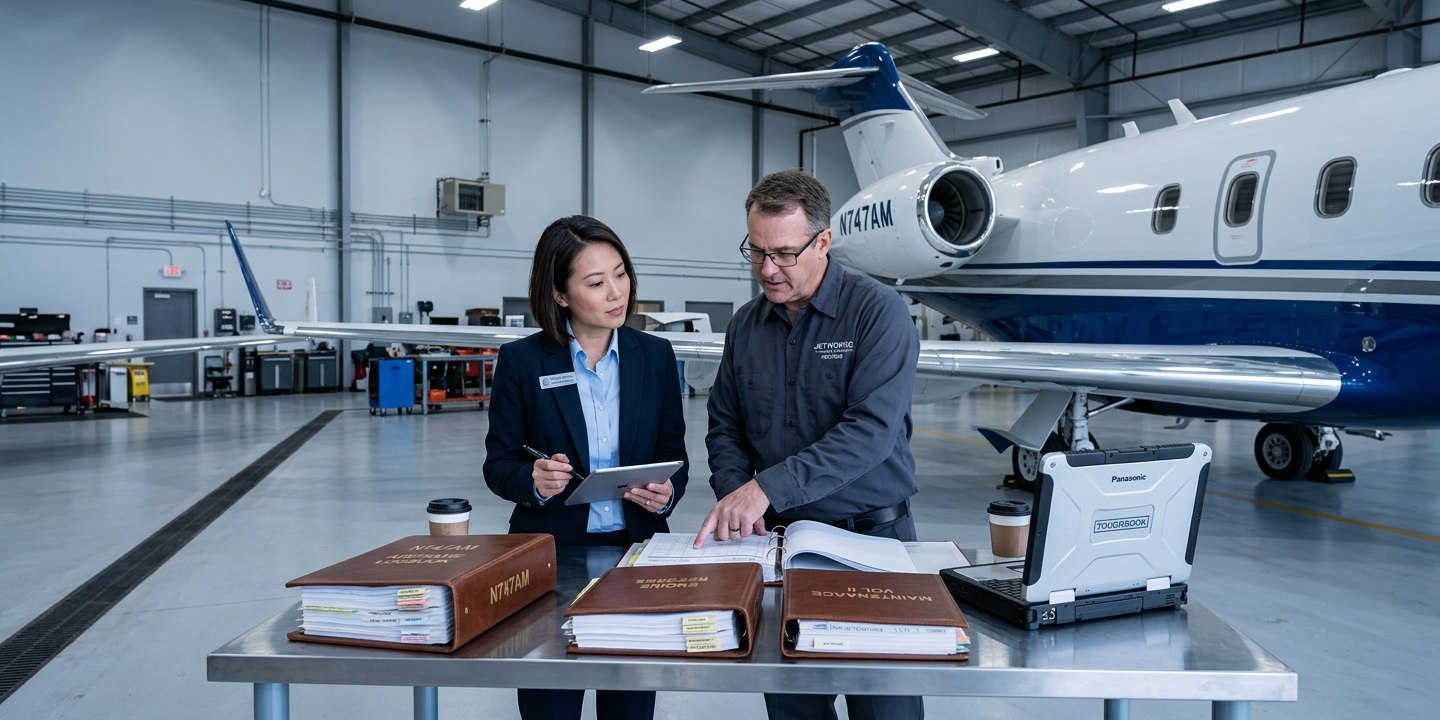
Leasing an aircraft is never just about the metal, the engines, or the lease rate. It also comes down to the paperwork, and that’s where an aircraft records audit for lessors becomes a major risk-control tool. When the records are clean, you can move faster at lease return, preserve asset value, and avoid nasty surprises that show up only after the aircraft is already off lease.
A strong records review helps lessors answer the questions that matter most, like whether the maintenance status is traceable, whether ADs and SBs are properly documented, and whether the aircraft will stand up to remarketing, redelivery, or a sale transaction. In practice, the audit is part compliance check, part valuation protection, and part negotiation strategy.
Why Lessors Need a Records Audit
For lessors, an aircraft is both a flying asset and a financial instrument. If the records are incomplete, inconsistent, or missing signoffs, the aircraft may still be airworthy, but its marketability can take a hit.
Here’s the thing, a records gap can create delays in lease return, drive up rework costs, and reduce buyer confidence. That’s especially true when the next operator needs a full history to support continued airworthiness, import or export certification, or an airworthiness review.
An aircraft records audit for lessors helps you spot issues early, before they become expensive disputes. It also creates a clear, objective baseline for return conditions and maintenance responsibility.
What a Lease-Return Records Review Should Cover
A useful audit does more than count logbooks. It checks whether the aircraft’s documentation tells a complete, credible maintenance story.
Core document categories
- Airframe, engine, APU, and propeller logbooks
- Component traceability records
- AD compliance status and supporting paperwork
- Major repair and alteration records
- Weight and balance documentation
- LLP status, life-limited parts records, and cycles tracking
- Damage history and corrosion repair records
- STC and field approval documentation
- Continued airworthiness instructions and status reports
- Bridge records for any missing periods in aircraft history
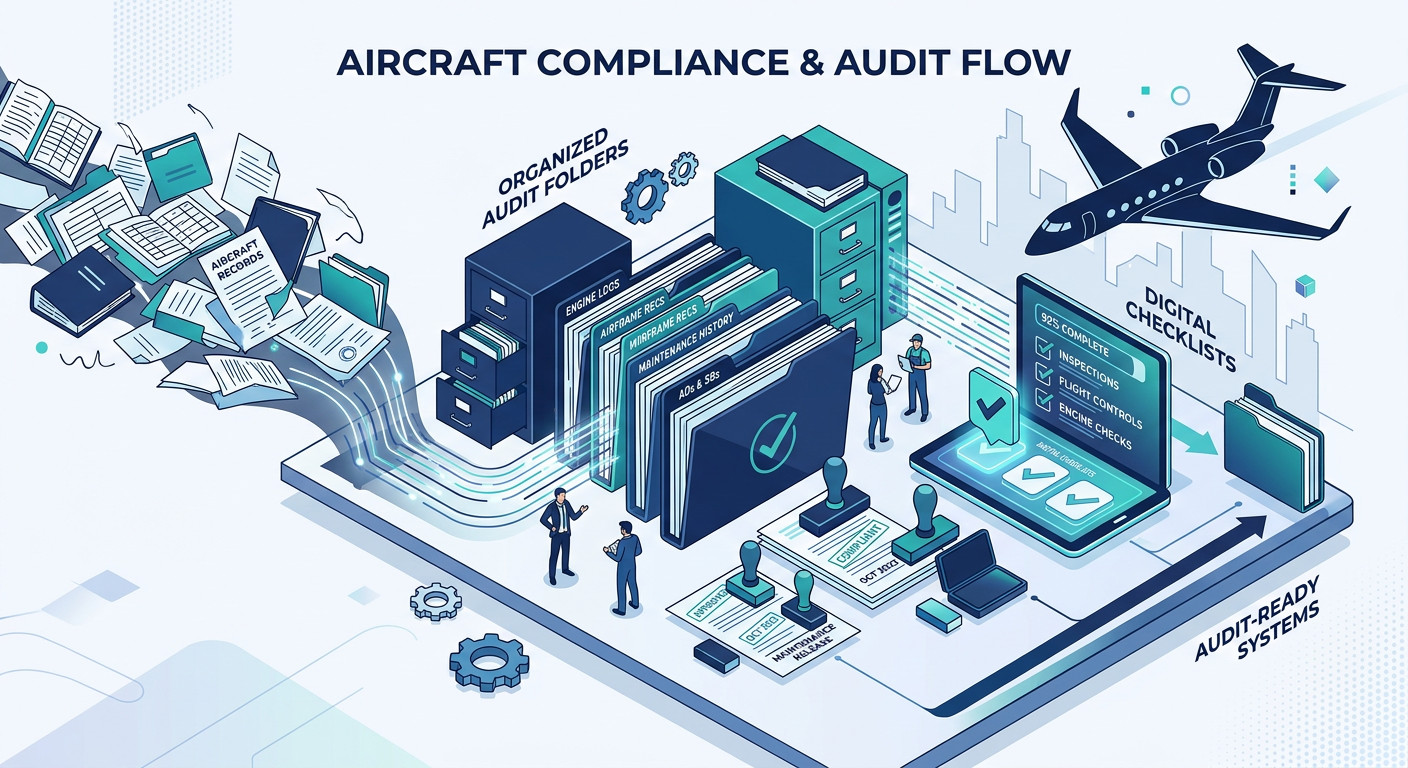
Common Red Flags in Aircraft Records
In lease portfolios, the same problems show up again and again. If you know where to look, you can catch most of them before redelivery becomes a scramble.
Watch for these issues
- Missing signatures, dates, or technician approvals.
- Unclear traceability for parts and components.
- Inconsistent times, cycles, or landings across records.
- Gaps in AD or SB compliance evidence.
- Unresolved open discrepancies from prior inspections.
- Missing repair data after heavy maintenance events.
- Incomplete export or import support documents for cross-border aircraft.
Even one of these issues can slow down an appraisal, delay delivery to the next lessee, or trigger expensive recertification work. Multiple issues together can create leverage problems at lease-end.
How an Audit Protects Asset Value
A well-executed records audit does two things at once. It helps the lessor defend the aircraft’s technical condition, and it supports the aircraft’s financial story.
Buyers, operators, and financiers all want confidence that the maintenance history is coherent and complete. If the records are organized and defensible, the aircraft is easier to remarket and often easier to price.
That matters because records quality influences both speed and value. In a competitive market, a clean records package can shorten downtime and reduce friction during pre-purchase evaluations or transition maintenance.
Best Practices for Lessors
If you want fewer surprises at redelivery, start managing records long before the lease ends. The best lessors treat records oversight as a continuous process, not a final-phase cleanup.
Practical habits that pay off
- Review records periodically, not just at return.
- Track exceptions and missing items in a live discrepancy log.
- Align maintenance status reporting with lease return conditions.
- Keep digital and hard-copy files reconciled.
- Verify compliance evidence after every major event.
- Confirm that bridge records are created when gaps appear.
A proactive process makes it easier to identify issues while there is still time to fix them efficiently. It also reduces the odds of arguments over who is responsible for corrective action.
Where Specialized Support Helps
Many lessors manage large portfolios or work across multiple jurisdictions. That is where specialized aviation support becomes valuable.
A technical team can help evaluate records against lease requirements, operational history, and regulatory expectations. For aircraft moving in or out of the United States, the records package may also need to support import or export certification, special flight permits, or aging aircraft compliance reviews.
If you need a deeper transition review, services like lease-return inspections and airworthiness certification support can help connect the records to the physical aircraft condition. That combination is what makes the audit truly useful, not just complete.
FAQ
What is an aircraft records audit for lessors?
It is a structured review of the aircraft’s maintenance and compliance documentation to verify completeness, traceability, and lease-end readiness. The goal is to reduce risk, protect asset value, and support redelivery or remarketing.
When should a lessor start the audit?
The earlier the better. Many lessors begin review well before lease-end so there is time to request missing documents, resolve discrepancies, and avoid last-minute disputes.
Does a records audit replace a physical inspection?
No. Records review and physical inspection work best together. The paperwork tells you what was done, while the aircraft confirms whether the condition matches the paperwork.
What causes the most trouble during lease return?
Missing logbook entries, incomplete AD proof, inconsistent times and cycles, and unsupported component traceability are common problem areas.
Can records issues affect aircraft value?
Yes. Incomplete or weak records can reduce buyer confidence, slow a sale, and add cost during transition or remarketing.
Do international operators need different support?
Often, yes. Cross-border transactions can require additional certification and documentation checks, especially for import, export, and continued airworthiness requirements.
Move From Reactive to Ready
If you wait until lease return to inspect the records, you are already behind. A smarter approach is to treat documentation as a live asset and audit it before it becomes a problem.
Air Tech Consulting helps lessors, operators, and aviation stakeholders with aircraft records review, lease-return inspections, and FAA DAR support so you can move from uncertainty to a clear action plan. If you are preparing for a transition, start with a conversation at Air Tech Consulting.
Final Takeaway
A strong aircraft records audit for lessors is not just administrative housekeeping. It is a practical way to protect value, speed up transitions, and reduce compliance risk. When the records are solid, the aircraft is easier to place, easier to sell, and easier to trust.