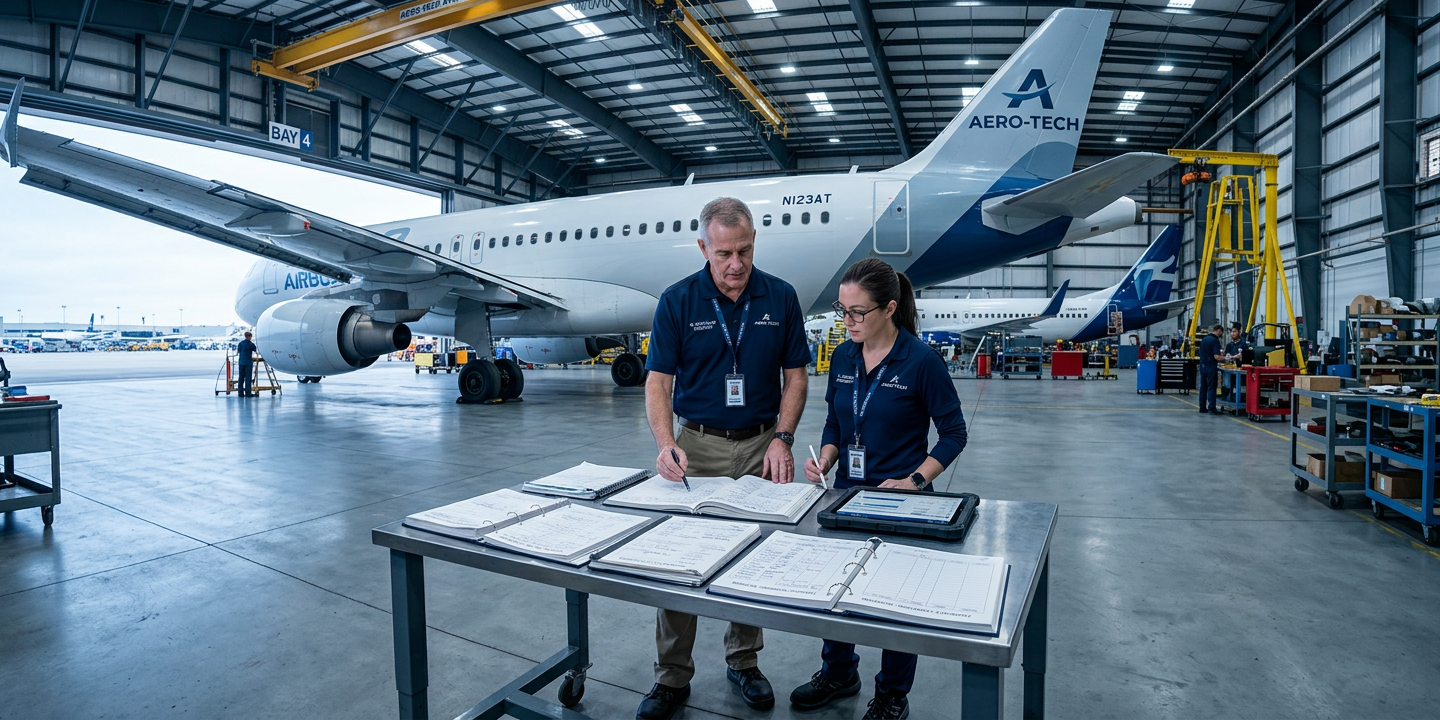
When an aircraft gets older, the paperwork matters almost as much as the metal. Gaps in maintenance history, missing life-limited part traceability, or incomplete repairs can create delays, added costs, and compliance headaches at exactly the wrong time.
That is why the FAA aging aircraft records review requirements deserve serious attention from lessors, airlines, MROs, and buyers. A thorough review is not just a box-checking exercise, it is how you verify airworthiness, reduce risk, and protect the value of the asset.
What The FAA Means By Aging Aircraft Records Review Requirements
FAA aging aircraft records review requirements are designed to ensure the airplane’s maintenance history supports continued safe operation. In practice, that means reviewing records for completeness, consistency, traceability, and evidence that the aircraft and its components have been maintained in accordance with applicable rules and approved data.
For B2B operators, this review often comes up during:
- Lease return and redelivery
- Pre-purchase inspections
- Import or export certification
- Major maintenance events
- Life-limited component verification
- Long-term fleet transitions
The key question is simple: can you prove the aircraft is exactly what the records say it is?
Why Records Reviews Matter More As Aircraft Age
Older aircraft can have complex histories. They may have changed operators, undergone repairs at different facilities, or accumulated countless logbook entries across decades. If records are incomplete, you can end up with uncertainty around parts status, corrosion programs, structural inspections, or recurring airworthiness directives.
That uncertainty affects more than safety. It affects resale value, lease negotiations, and the time it takes to place the aircraft back into service.
What A Proper Review Typically Checks
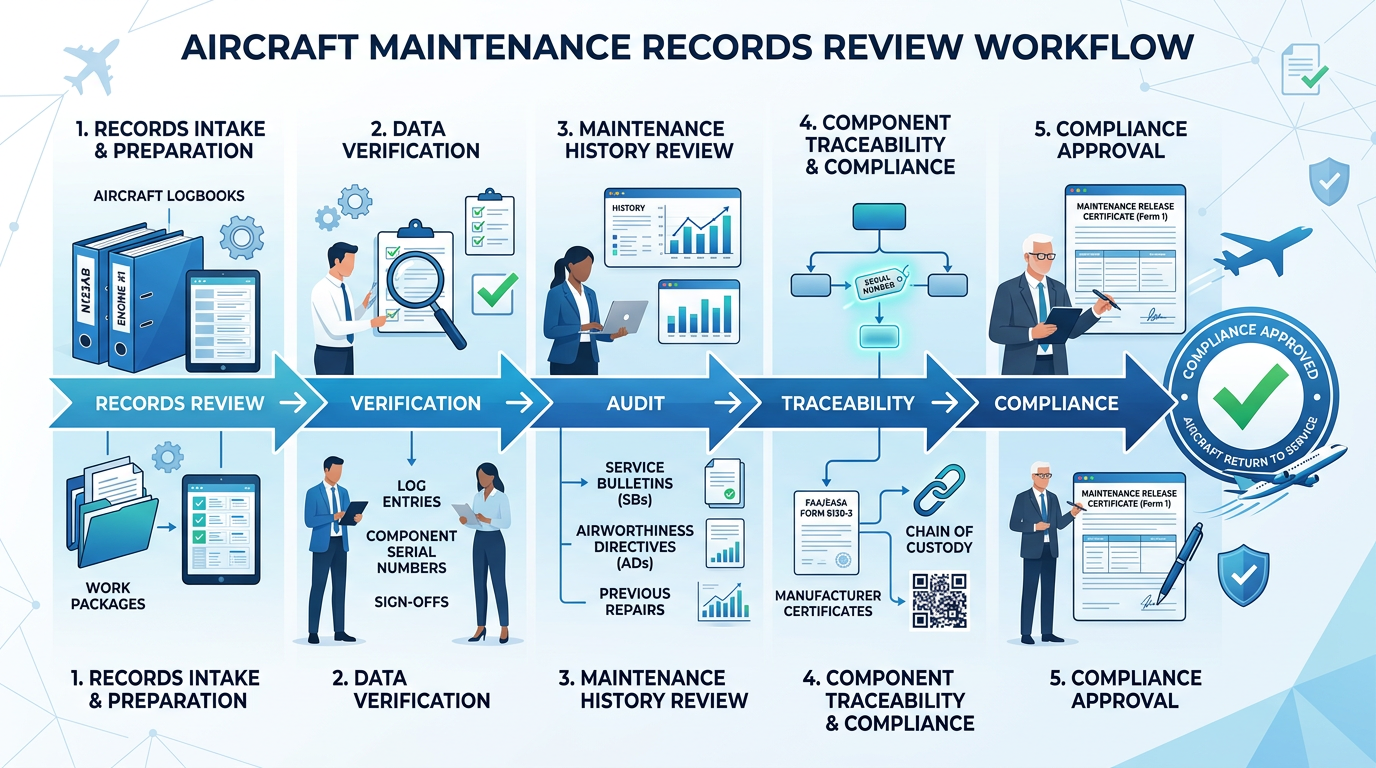
A strong records review is not just a quick scan of logbooks. It usually includes a systematic review of the aircraft’s maintenance and operational history, including:
Airframe and component traceability
You want proof that serialized parts, life-limited components, and major assemblies can be traced to approved documentation. Missing traceability can create expensive follow-up work.
Compliance with inspections and directives
The records should show scheduled inspections, special inspections, structural checks, and applicable airworthiness directives were completed on time and properly signed off.
Repairs and modifications
Major repairs and alterations should be supported by approved data, clear references, and complete installation records. If a repair history is vague, it may need engineering support.
Damage history and corrosion findings
Older aircraft often accumulate dents, repairs, corrosion treatments, and repeat discrepancies. These need to be documented clearly so the next operator understands the aircraft’s condition.
Status of life-limited parts
Aging aircraft reviews often focus on cycle counts, hours, and remaining life for critical components. If the numbers do not reconcile, the aircraft can be delayed from delivery or return.
Common Compliance Areas For Commercial Operators
For large operators and lease portfolios, records review often intersects with regulatory obligations under aging aircraft rules and continuing airworthiness programs. Depending on the aircraft and operation, the review may be tied to continued airworthiness expectations under applicable operating rules such as 121, 135, and international import or export requirements.
That means the team should understand not only what is missing, but also whether the missing item is a true compliance issue or a documentation gap that can be resolved with acceptable substantiation.
Practical Risks Of An Incomplete Records File
Here is the thing. An incomplete file can create more work than a maintenance event itself.
Common problems include:
- Delays in delivery acceptance
- Unexpected repair or inspection findings
- Reduced aircraft valuation
- Lease return disputes
- Hard-to-reconcile component status
- Certification delays for import or export
For lessors and buyers, the financial impact can be immediate. For operators, the operational impact can mean downtime, rework, and last-minute engineering support.
How To Prepare Before The Review Begins
The best records reviews start before anyone opens the first binder or PDF folder. A structured preparation process usually includes:
- Gather all logbooks, work orders, and major repair records.
- Reconcile airframe, engine, APU, and component histories.
- Verify AD status, inspection intervals, and recurring tasks.
- Confirm traceability for life-limited parts.
- Identify missing documents early so they can be sourced or reconstructed.
If you are working toward a transaction or return event, start early. The earlier you find a gap, the more options you have to fix it without delaying the schedule.
How Air Tech Consulting Supports Aging Aircraft Reviews
Air Tech Consulting helps operators, lessors, and buyers navigate documentation-heavy aviation events with confidence. That can include aging aircraft inspections and records review, lease-return support, pre-purchase evaluations, and assistance with airworthiness certification for import or export.
For organizations that need a disciplined, aviation-focused review process, the goal is not just finding problems. It is helping you close them efficiently and keep the aircraft moving.
FAQ
What is included in an FAA aging aircraft records review?
It usually includes maintenance logs, inspection records, AD compliance, repair history, component traceability, and life-limited part status. The goal is to verify the aircraft’s documented airworthiness history.
Who needs an aging aircraft records review most often?
Commercial airlines, aircraft leasing companies, MROs, buyers, sellers, and international operators all use these reviews, especially during lease returns, acquisitions, and certification events.
Is a records review the same as a physical inspection?
No. A records review focuses on documentation, while a physical inspection evaluates the aircraft itself. In many cases, both are needed to make a complete airworthiness determination.
Why do records gaps matter so much?
A missing document can leave uncertainty about a component’s life status, a repair’s approval basis, or whether an inspection was truly completed. That uncertainty can slow delivery or require additional work.
Can missing records be repaired or reconstructed?
Sometimes, yes. Depending on the item, supporting evidence may be rebuilt from alternative records, vendor data, engineering substantiation, or operator history. The acceptability depends on the specific issue.
When should I start the review process?
Start as early as possible, ideally well before a lease return, sale, or import/export milestone. Early review gives you time to resolve discrepancies without creating schedule pressure.
Move Forward With Confidence
If you are dealing with an aging aircraft, the records review is not a minor administrative step. It is a critical part of protecting compliance, value, and operational continuity.
If you need help with FAA aging aircraft records review requirements, lease-return preparation, or certification support, connect with Air Tech Consulting and get a focused, aviation-specific review process on your side.